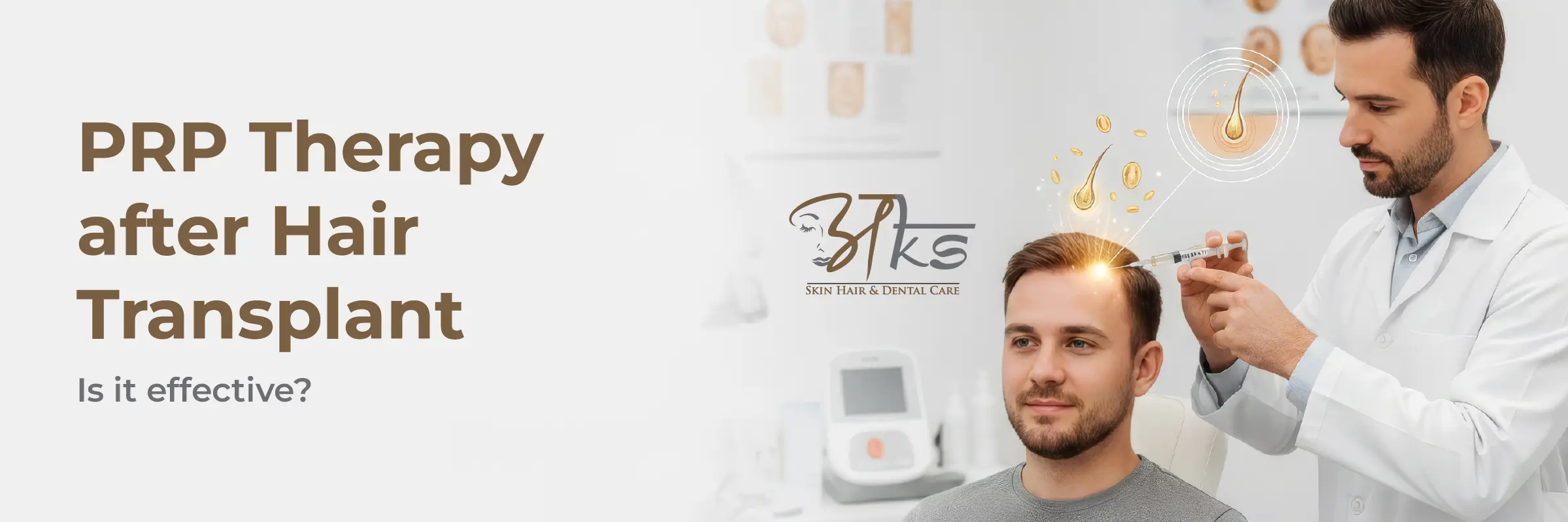
A hair transplant gives you a new beginning, but the journey doesn’t end the moment the grafts are implanted. Many surgeons recommend additional growth-supporting treatments to enhance the results, and one of the most popular options today is PRP therapy.
PRP — Platelet-Rich Plasma — is not a discovery, but its role in post-transplant hair growth has gained huge attention in recent years. Patients want faster healing, stronger grafts, thicker density, and more natural-looking results, and PRP promises exactly that.
But the big question remains: Is PRP therapy after a hair transplant truly effective? Let’s break it down clearly.
PRP is created by drawing a small amount of your blood and spinning it in a centrifuge. This process separates the plasma rich in platelets — the part of your blood that contains powerful growth factors.
These growth factors stimulate:
When PRP is injected into the scalp after a hair transplant, it helps nourish the newly implanted grafts and boosts their survival rate. It essentially creates an ideal healing environment around each follicle.
Yes — PRP therapy is widely considered effective in improving both short-term and long-term hair transplant outcomes. Several studies and clinical experiences suggest that patients who undergo PRP therapy after surgery often notice:
PRP doesn’t replace a hair transplant — but it enhances it. Think of PRP as a booster that supports your newly transplanted follicles during the early, delicate stages of growth.
After a transplant, your grafts go through stages: healing, resting, and then active growth. PRP helps support each stage.
PRP contains growth factors that speed up tissue repair. This helps reduce inflammation and accelerates recovery.
Right after a transplant, grafts need oxygen and nutrients. PRP increases blood supply around each follicle, ensuring better nourishment and survival.
Shock loss — temporary shedding — is common after a hair transplant. PRP minimizes this shedding and helps hold more follicles in place.
PRP stimulates the anagen (growth) phase, helping hair appear sooner and grow thicker.
Even existing thin or weak hair gets stronger over time, making the result look fuller and more natural.
Most clinics recommend 3 to 6 PRP sessions spaced one month apart. However, the exact number depends on:
Some patients continue maintenance PRP once every 6–12 months for long-term support, especially those dealing with androgenetic alopecia.
PRP should not be done immediately after surgery. Grafts must settle first. Many patients also look for guidance on going back to work after a hair transplant.
The ideal timeline is:
PRP therapy is generally very safe because your own blood is used. Minor temporary effects include redness or swelling, which may also occur in scalp conditions like dandruff.
PRP therapy is not a replacement for a hair transplant — but it is one of the most powerful boosters you can add to your treatment plan.
If you’re looking for expert guidance and advanced post-transplant care, learn more about AKS Clinic and consult experienced trichologists in Gurgaon for personalized hair restoration solutions.